
Updated:
Short answer
Direct-sow carrots into a loose, well-drained seedbed, keep the seed zone evenly moist while they emerge, then thin for the chosen variety. A tall frame alone does not produce straight roots: stones, compaction, crowding and uneven watering still matter. Start with the seed packet and local planting guidance, then measure the usable rooting medium in your bed. This is an extension-informed growing guide, not a crop trial or a promise of a particular harvest.
Choose the carrot before choosing the bed
University of Maryland Extension distinguishes long Imperator carrots from shorter Chantenay, miniature and round types. Its examples describe root shape and length, not a guaranteed minimum planter depth. Choose a named variety that suits your available growing space and intended use; do not assume every packet labeled carrot produces the same root.
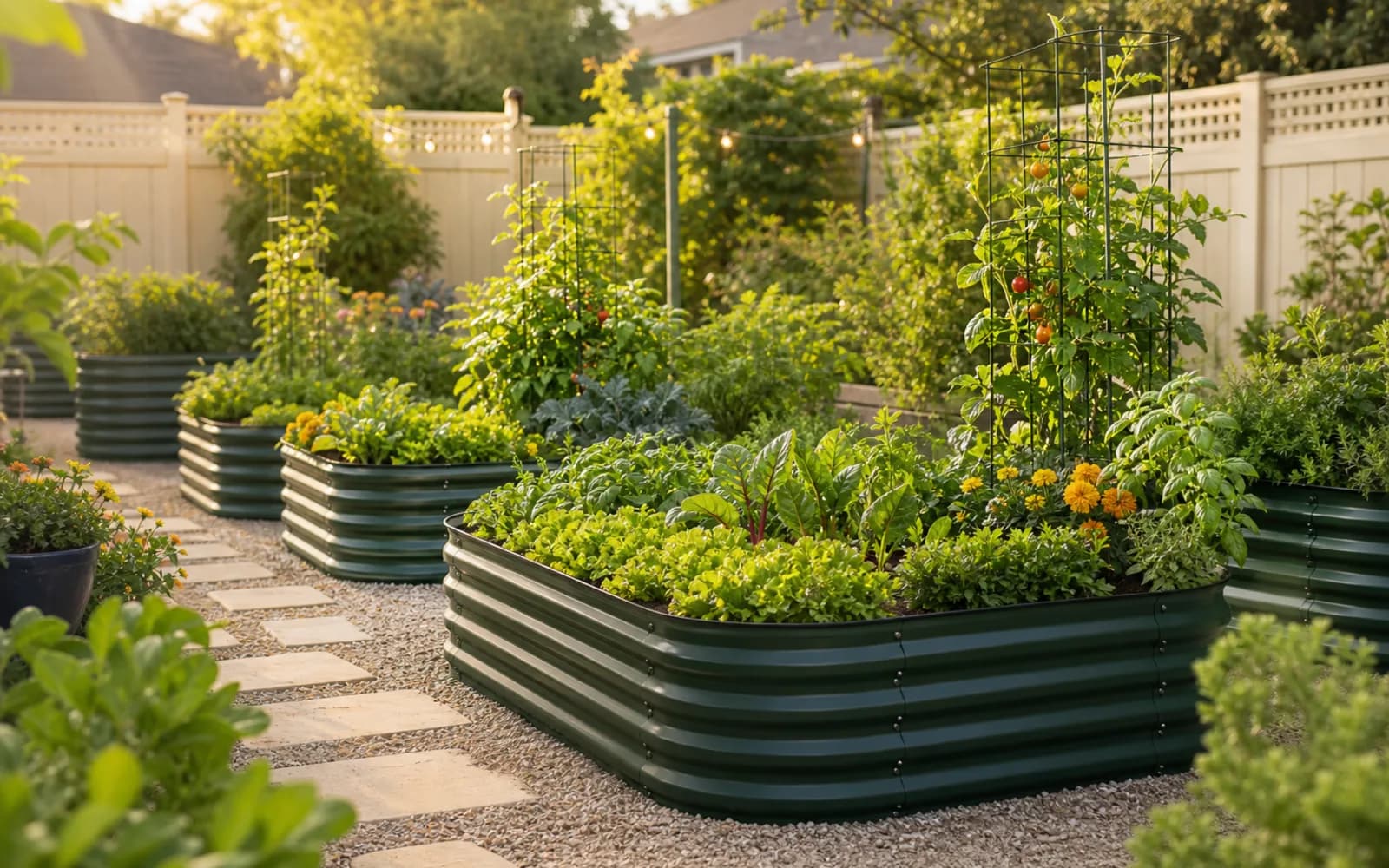
Check what is below the frame. An open-bottom bed over workable soil and a planter with a solid floor have different limits. Measure the loose soil available to the roots, including the position of a planter floor and the actual fill line. Use our raised-bed depth guide for that measurement. Leave room for the selected crop rather than filling a tall frame with layers that interrupt its rooting area.
| Bed observation | Decision before sowing |
|---|---|
| Stones, hard clods or compacted areas in the root zone | Resolve the obstruction before planting; extra frame height does not remove it |
| A floor or shallow soil chamber | Compare the actual growing space with the named variety; consider a suitable shorter type |
| Soil stays saturated after watering | Investigate drainage before adding seeds or scheduling more water |
| Unknown fertility | Use an appropriate soil test and crop recommendation rather than adding fertilizer by habit |
For medium selection, use the soil selection guide. A bag described as an amendment is not automatically a complete rooting medium. Keep a purchase for soil volume separate from a response to a nutrient-test result.
Prepare and direct sow
University of Minnesota Extension recommends sowing carrots directly where they will grow because transplanting can damage or redirect the early taproot. Prepare the site first rather than starting seedlings in small pots while you wait for a bed to become available.
- Select a locally appropriate sowing window and a named variety. Record whether the packet's maturity figure starts at sowing; do not transplant another crop's calendar onto carrots.
- Check the root zone and drainage. Remove stones and break up clods while preparing a fine surface; avoid leaving a compacted layer underneath it.
- Mark the intended rows, label the variety and record the sowing date. These small seedlings can otherwise be difficult to distinguish from weeds.
- Follow the packet for sowing depth. Maryland gives a general covering depth of one-quarter to one-half inch, but that range is not an instruction to bury every seed at the deeper end.
- Water gently enough to maintain the seedbed without displacing seed. Inspect the surface after rain or watering for crusting and dry patches.
- Keep the marked area under observation while waiting for emergence. Minnesota notes that germination can take up to three weeks; an apparently empty row is not immediately proof that the seed failed.
Timing is regional. Maryland discusses spring and fall crops; Minnesota's spring calendar belongs to Minnesota. Utah State University reports that high temperatures reduce germination. Check local soil and seasonal conditions before buying seed for an immediate planting. For a later crop, the fall planting worksheet helps separate bed availability from a realistic harvest window.
Thin for the variety
Do not keep every seedling merely because germination went well. Crowded plants compete for the space in which the roots need to enlarge. Look at the emerged stand, not just the distance at which you intended to sow.
Extension spacing examples differ. Utah State's planting section uses two to three inches between plants in rows twelve to eighteen inches apart. Minnesota uses approximately two to four inches between carrots, allowing more for larger varieties. Maryland discusses wide rows and gives more than one thinning range in different parts of its guide. These are planting-system and variety considerations, not numbers to average into a universal rule.
Choose the seed supplier's instructions and local advice for your variety and layout, then mark the desired spacing on a ruler or stick. Maryland recommends cutting unwanted seedlings to avoid disturbing neighboring roots. Snip carefully at soil level rather than treating the thinnings as transplants. If you used seed tape or pelleted seed, inspect the actual stand anyway; easier seed handling does not guarantee that every position has one healthy plant.
Change the moisture check as plants grow
The seedbed surface and an established crop need different observations. A drip line that wets the root zone later may leave part of a newly sown row dry. Before relying on it, look at where water actually reaches the seed row. Our drip installation guide explains layout and coverage checks.
| Stage | What to check | Decision |
|---|---|---|
| Sowing to emergence | Seed-zone moisture and surface crusting | Keep the seedbed evenly moist with gentle delivery; respond to actual drying |
| Seedlings establishing | Gaps, weeds and the soil around small roots | Maintain moisture and thin carefully without deep cultivation |
| Roots enlarging | Moisture below the surface, rain and delivery coverage | Adjust watering to the medium and weather; avoid alternating drought and excessive watering |
| Harvest approaching | Root size and present soil condition | Inspect a sample rather than adding water or fertilizer to meet a calendar date |
Utah State warns that fluctuating moisture can contribute to cracking and other root problems. Minnesota recommends inspecting wetting depth with a trowel. Those observations are more useful than copying a fixed daily timer setting from a different soil or climate. Make shallow weed-control passes carefully; do not cut through developing carrot roots.
If the established crop needs a new watering setup, view the Rain Bird GARDENKIT on Amazon as an optional starting point after checking your drawing. Rain Bird's product page identifies this raised-bed kit and says a hose-end timer is sold separately for automation. Compare the exact instructions and your water connection before buying; the kit does not establish that every carrot seed row will stay moist. The existing link's public destination was checked October 19, 2026, against ASIN B0BCH7PYCD. Current seller, stock, price and commission were not verified.
A small row plan you can check
Suppose a gardener has a usable patch forty-eight inches long and thirty-six inches wide, can reach it comfortably, and chooses a variety whose instructions permit three-inch final spacing. This is a hypothetical layout exercise, not a bed product specification or a yield forecast.
The gardener draws three row centerlines six, eighteen and thirty inches across the patch: twelve inches between rows and six inches from each outer row to its side edge. Along each forty-eight-inch row, the first planned final plant is one and a half inches from the end; the next positions are every three inches, ending at forty-six and a half inches. That gives sixteen planned positions per row, or forty-eight across three rows.
This calculation describes final spacing, not a requirement to sow exactly forty-eight seeds. Germination losses and later thinning can change the stand. Nor does twelve-inch row spacing certify access to every bed; check your reach from the actual paths. If the packet calls for more space, redraw the plan before sowing. Keep the rest of the bed available for the actual crop plan rather than adding rows to reach an assumed production target.
Diagnose before adding an amendment
| What you see | Questions to investigate |
|---|---|
| Forked or distorted roots | Were there stones, compaction, root injury or signs of pest damage? |
| Healthy tops but small roots | Were plants crowded, or was excessive nitrogen applied? |
| Cracks | Did the bed alternate between dry and wet conditions? |
| Green shoulders above the soil | Has the root top become exposed? Maryland advises hilling soil over it |
Minnesota and Utah State discuss several possible causes of poor roots. A photograph alone does not prove which one occurred in your bed. Record the variety, spacing, watering changes, fertilizer history and affected area before asking a local extension service for help. Do not respond to every small root with another fertilizer dose or a new bag of compost.
Harvest a sample, then update the record
Check the packet's maturity guidance, then inspect a root for the size and quality you want. Minnesota allows harvesting once carrots reach a useful size; roots need not all leave the bed on one day. Loosen the surrounding soil carefully before lifting, especially when the tops are small or the soil resists pulling. Avoid driving a fork through the roots you intend to keep.
Record sowing, emergence, thinning and first harvest dates with the variety and observations. If some roots forked, note where and what the soil was like. If the stand was too crowded, correct the next spacing plan. This makes the next sowing more informed without turning one household harvest into a comparative trial or guaranteed result.
Sources and limits
Read October 19, 2026: University of Maryland Extension, Growing Carrots in a Home Garden, University of Minnesota Extension, Growing carrots and parsnips, and Utah State University Extension, Carrots in the Garden. Regional dates, spacing systems and variety descriptions retain their source context. The row layout is our arithmetic example. No bed model, harvest quantity, seller, crop performance or universal planting calendar is verified by this article.
Common questions
Should I transplant carrot seedlings into the raised bed?
Direct sow where the crop will grow. Minnesota Extension warns that transplanting can damage and redirect the early taproot.
How far apart should I thin carrots?
Use the named variety's instructions and suitable local guidance. Extension examples vary with variety and planting system; do not average them into one universal spacing.
Does a taller raised bed guarantee straight carrots?
No. Check the usable rooting medium, stones, compaction, spacing and moisture. Frame height alone does not resolve those conditions.