
Raised bed planning tool
Raised Bed Soil Calculator
Estimate soil volume before you buy a metal raised bed, elevated planter, or vegetable garden kit. The biggest surprise in raised bed shopping is often not the bed itself, but how much fill it takes.
Estimated soil volume
45.3 cubic feetThat is about 1.68 cubic yards, or roughly 1284 liters of total fill.
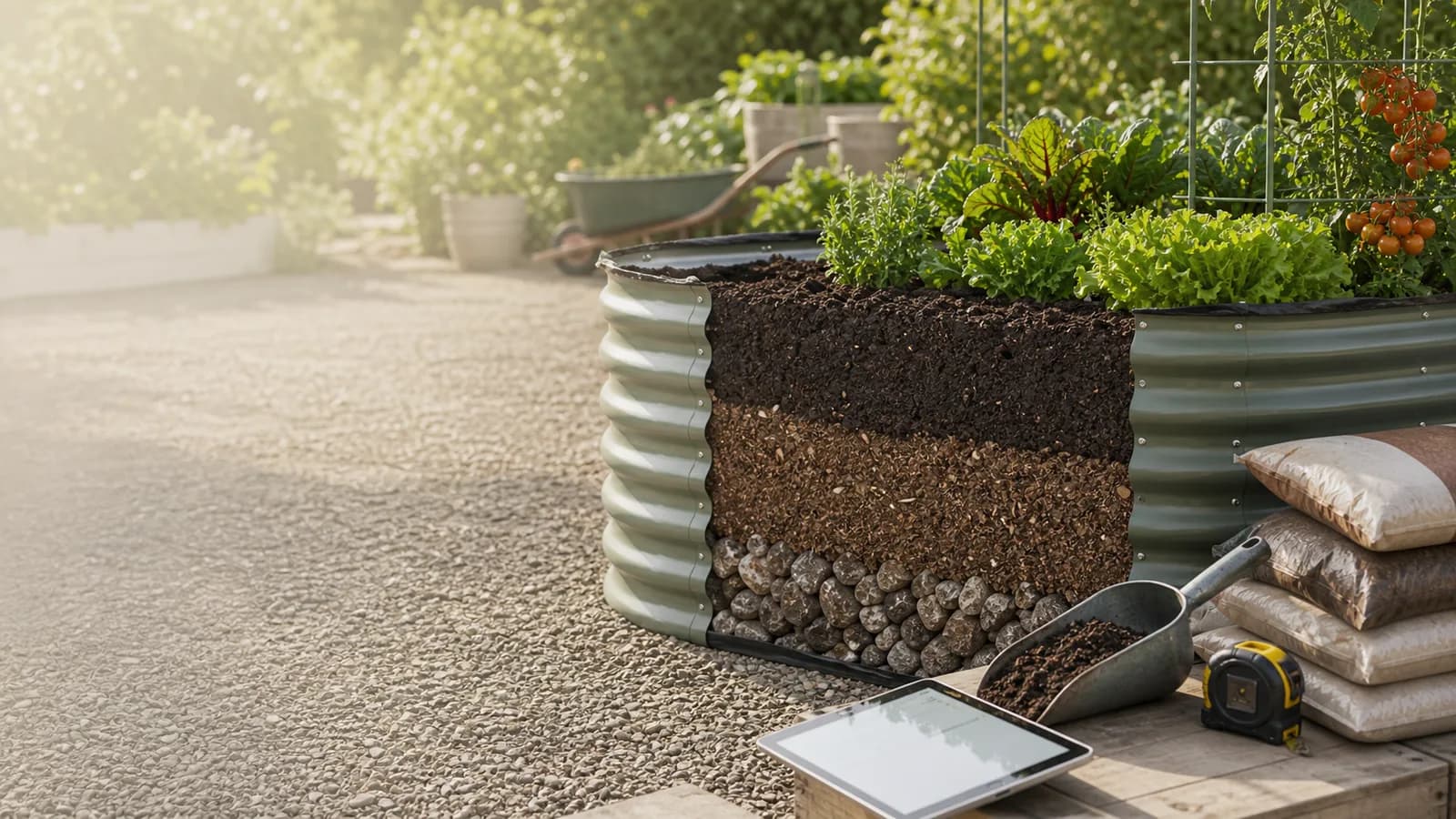
Illustrative allocation A
Example allocation only: 35% bulk, 20% compost and 45% growing mix; not a planting prescription.
- Bottom bulk layer
- 15.9 cu ft
- Compost layer
- 9.1 cu ft
- Top growing mix
- 20.4 cu ft
Compare the intended fill depth with crop and site requirements; no universal depth is recommended.
Buying decision
Use soil volume as a purchase filter, not an afterthought.
Compare measured growing area, intended fill depth, access and current material costs for your actual layout. A taller panel alone does not establish better value, crop performance or comfortable access. The calculator estimates geometric quantities, not those outcomes.
Worked quantities
Full fill and top-off are different orders.
For an internal rectangular area, cubic feet equal length in feet × width in feet × added depth in inches ÷ 12. Cubic yards equal cubic feet ÷ 27. Enter the depth you intend to add, not automatically the panel height. The current depth input accepts 6–36 inches. For a 2 inch top-off, use the formula below; do not enter 6 inches as a substitute.
A measured 4 × 8 foot area with 12 inches of added fill is 32 cubic feet, or about 1.19 cubic yards. A 2 inch top-off over the same area is about 5.33 cubic feet. Those are arithmetic examples, not the usable dimensions of a particular bed or a recommended depth for every crop.
With a bag labeled 1.5 cubic feet, divide the estimate by 1.5 and round up to whole bags: the examples imply 22 bags for the full fill and 4 for the top-off. Verify the volume on the bag actually selected. The whole-bag rounding is not an allowance for settling, spillage or delivery differences.
Measure inside dimensions and existing fill first. Rounded corners, an irregular footprint, internal hardware or a shaped bottom can change usable volume. Do not apply the rectangular result unchanged. Record each area and the intended added depth, then sum the measured quantities before requesting a bulk quote.
Keep quantity separate from material suitability. The calculator does not decide drainage, amendment dose, crop needs, structural loading or a universal fill recipe. Check your fill plan and soil refresh guidance before purchasing an amendment simply because the bed has spare space.
Best Soil for Raised Beds
Compare bagged raised-bed mixes, compost, coco coir, and bulk-soil tradeoffs.
Buying guideBest Metal Raised Garden Beds
Compare bed height, coating, modular layout, and fill-cost tradeoffs.
Setup guideWhat to Put at the Bottom
Choose bottom layers without blocking drainage or wasting quality mix.
Comfort guideBest Raised Beds for Seniors
Balance working height, reach, soil volume, and assembly risk.
Raised Bed Soil Calculator FAQ
How do I calculate soil for a raised garden bed?
For a rectangular area, multiply internal length and width in feet by intended fill depth in feet. Divide inches by 12 first. Use actual usable dimensions and fill depth rather than nominal outside dimensions or full panel height; the result is a geometric estimate.
Do I need to fill the entire raised bed with bagged soil?
The calculator estimates volume, not a suitable material recipe. Account for existing fill and your selected planting plan, and check drainage and usable root-zone requirements. It does not establish that any proposed bottom material is suitable.
How deep should soil be for vegetables in a raised bed?
Choose usable planting depth for the particular crop and site using relevant growing guidance. Panel height is not the same as root-zone depth, and this calculator does not prescribe a universal vegetable depth or establish a comfort benefit.
Why do taller metal raised beds cost more to fill?
For the same internal rectangular area, geometric volume increases directly with intended fill depth. Filling to 32 inches instead of 17 inches gives about 1.88 times the volume. Nominal bed heights do not prove actual fill requirements or delivered material cost.