Start hereVego Garden
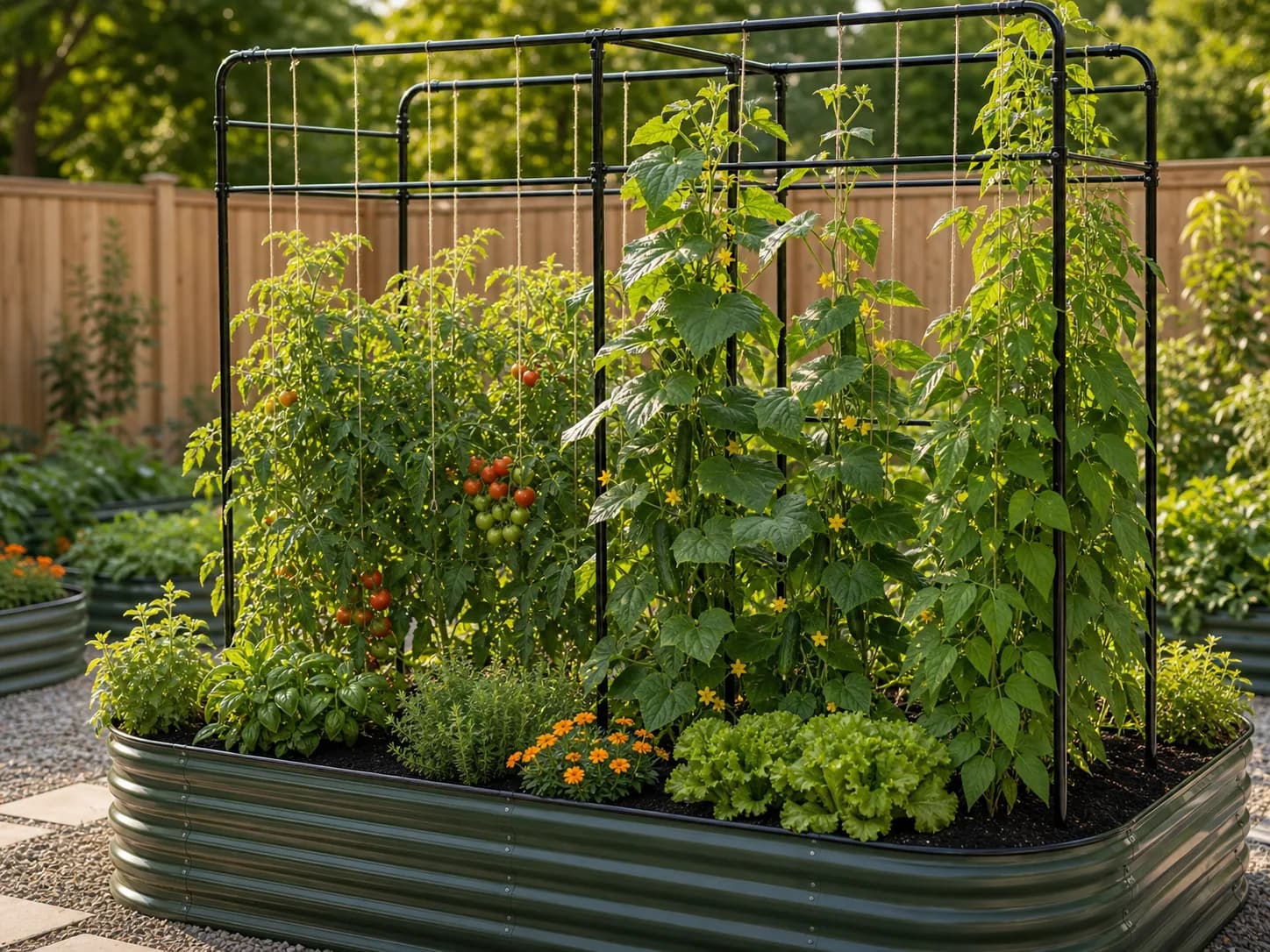
8 ft Tomato Metal Frame Trellis
- Choose if
- Tomatoes, cucumbers, beans, vining crops in rectangular raised beds
- Skip if
- Buyers who only need a basic bed without vertical crop support.
- Check first
- Garden bed not included
Choose tomato cages, stakes, string supports, or row systems by plant habit, anchoring, maintenance, and harvest access in a raised bed.
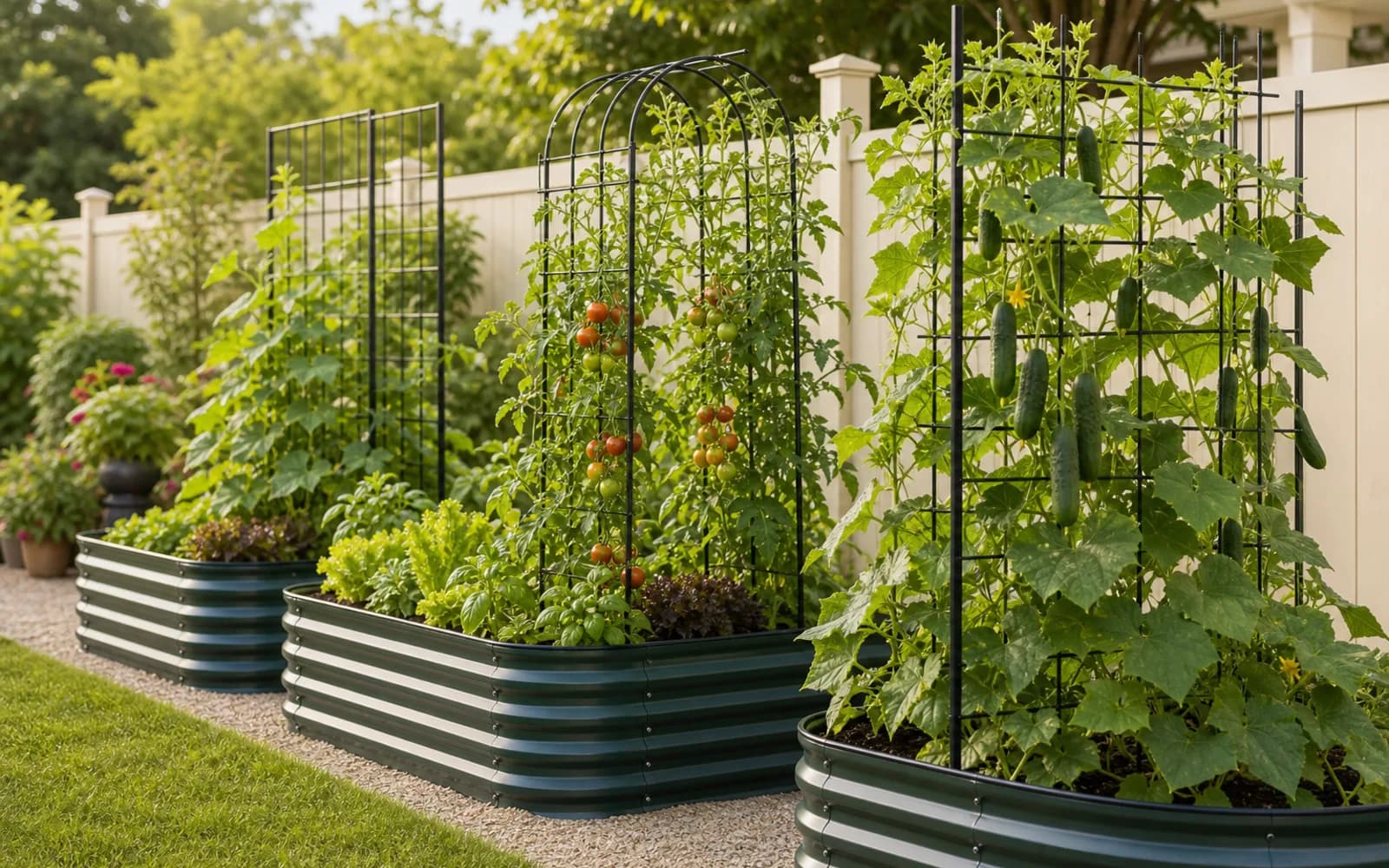
Use this compact matrix before reading the full guide. It keeps the choice grounded in fit, tradeoff, setup risk, and a current offer path without showing stale Amazon prices or ratings.
Accessory fit depends on bed size, crop plan, and watering setup. Check the product page for current compatibility details.
Best for: Tomatoes, cucumbers, beans, vining crops in rectangular raised beds
Key tradeoff: Garden bed not included
View decision notesCheck current price on AmazonBest for: Beginner raised-bed gardeners who want a known-brand kit for one 4 x 8 vegetable bed
Key tradeoff: Limited coverage for multi-bed gardens
View decision notesCheck current price on AmazonBest for: Gardeners comparing a bagged raised-bed mix for measured fill volume or top-offs, after checking the product instructions and crop rooting space
Key tradeoff: Bagged soil can be expensive for large beds
View decision notesCheck current price on AmazonUpdated:
Choose a tomato support around the mature plant and the maintenance you will actually do. A cage, a single stake, and an overhead string system can all organize tomato growth, but they ask different things of the gardener. The wrong choice often becomes obvious only when fruit and foliage make a small spring plant much harder to handle.
This guide compares support systems rather than ranking untested products. It concentrates on tomatoes in raised beds, including anchoring, access, and end-of-season storage. For supports shared with cucumbers, peas, or beans, see the broader garden bed trellis guide. For the container or bed itself, use raised beds for tomatoes.
University of Minnesota Extension's tomato guide distinguishes bush-type determinate plants from continually growing indeterminate vines and describes support options. Use the named variety's growing instructions as your starting point. A photograph of a tomato seedling does not tell you its eventual habit, and the word cherry describes fruit size rather than reliably indicating a compact plant.
Write down the variety, whether it is determinate or indeterminate, its recommended spacing, and any training guidance before purchasing supports. If the label is incomplete, look up the breeder or seed supplier's information. This is more useful than buying a cage because its color matches the raised bed.
The second question is how often you will work on the plants. A closely managed string system may fit someone who checks and trains stems regularly. A broad cage may better fit someone who wants to contain a naturally branching plant without managing it as a narrow column. Neither is maintenance-free: inspect ties, growth, and anchoring throughout the season.
| Support system | Where it can fit | Work it asks of you | Main limitation |
|---|---|---|---|
| Individual cage | A plant allowed to branch within its support | Guide growth and check stability | Footprint and storage bulk |
| Single stake | A plant managed beside one vertical support | Regular tying and appropriate training | Requires consistent attention |
| Overhead string | A planned row with a suitable frame | Repeated training and frame inspections | Needs dependable overhead anchorage |
| Row weave | Several plants arranged for a coordinated system | Add and adjust support as the row grows | Less convenient for an irregular mixed bed |
| Rigid trellis panel | A deliberately trained row or edge planting | Position stems and maintain access | Can shade or obstruct neighboring crops |
Treat this table as a planning tool, not a universal ranking. A system that works for a row of matching varieties may be awkward when tomatoes alternate with peppers and herbs. Choose the layout and support together. Retrofitting a row weave around an already crowded mixed bed is much harder than leaving a clear row from the beginning.
A cage is useful when you want a support around an individual plant and can reserve enough room for its mature footprint. Compare the cage's working height, width, opening size, anchoring instructions, and how it is stored. The advertised total height may include legs that sit below the soil surface, so check how much support remains above ground after installation.
Imagine harvesting from the center as well as the outside. Can your hand and a ripe tomato pass through the openings without pulling hard on stems? Can you see and reach the inside for inspection? A dense mesh may look supportive while making those ordinary tasks frustrating. The best opening size for you depends partly on your hands and how you prefer to pick fruit.
Check assembly joints on folding cages before planting. Make sure the closure is secure and that all sections stand as intended. Follow the maker's anchoring instructions and add only compatible support arrangements. Do not assume thin legs pushed into loose fill will hold every mature plant in wind simply because the cage was upright when empty.
A stake can suit a gardener who wants a defined plant position and is willing to tie growth as needed. Choose ties that are appropriate for stems and leave room for growth. Recheck them rather than installing a tight loop once and forgetting it. The plant-training method should match the variety; avoid applying an aggressive pruning routine indiscriminately to every tomato.
String systems can keep a row organized, but the overhead frame becomes part of the support design. Assess where the load goes: into posts, anchors, a suitable structure, or the raised bed itself. A light decorative arch and a crop-support frame are not automatically equivalent. Use the structure's specifications and installation instructions rather than inferring capacity from its height.
These systems are less forgiving of missed maintenance when stems have already grown away from their intended path. Before choosing one, picture a busy week when you have only time to water. If the necessary tying or training would repeatedly be postponed, a different system or fewer plants may fit your schedule better.
Measure the available soil depth and determine what lies underneath. An open-bottom frame on suitable ground may permit an anchor to continue below the raised fill; a closed planter may have a floor, liner, reservoir, or shallow root zone. Do not drive stakes through components you have not located. Ask the planter manufacturer about approved support attachments where necessary.
If supports connect to the bed wall, verify that this use is allowed. A board or metal panel designed to retain soil may not be designed for a tall, wind-loaded crop support. Independent posts can be an alternative where the site permits them, but they still need an appropriate installation. Check underground services before driving long anchors.
Inspect after strong weather and after the crop becomes heavier. Look for leaning posts, loose connectors, tilted cages, and ties pulling against stems. Correct a developing problem while you can still work around the plant. Waiting until a support collapses can turn an adjustment into a difficult rescue with ripe fruit in the way.
Place an empty support in the proposed position and walk around it before planting. Allow for foliage extending beyond the frame. Keep the working path, hose route, and gate clear. If the tomatoes will stand along the back edge, check that you can reach their far side without stepping into the bed or pressing against neighboring plants.
For a two-sided bed, access from both long edges can make cage-grown tomatoes easier to manage. For a fence-side bed, a carefully placed row support may preserve a clearer working face. In either case, use the variety's spacing guidance rather than treating the support's footprint as the full spacing requirement.
Consider shade as a changing pattern, not a single compass rule. Trace where the mature plants and support will cast shadows at your site. Put short crops where the resulting light suits them. The raised bed layout guide offers arrangements to compare, but local buildings and the sun's seasonal path still affect your garden.
Suppose a gardener has an eight-foot-long bed and wants to try both a branching tomato in a cage and an indeterminate variety on a string. The first step is not dividing eight feet by the number of seedlings. Mark each variety's recommended spacing, then add the actual cage footprint and frame-post positions. Check whether the different systems interfere with watering and access.
If the layout becomes crowded, simplify the trial. Use one support style in that bed, or move one plant to an appropriately sized separate container. This creates a more interpretable first season: when access is difficult, you can identify the reason instead of untangling several incompatible structures.
Keep a small record of what you chose and why. Note the variety, support type, installed working height, tie method, and where maintenance became awkward. At season's end, record whether the limitation was plant size, anchoring, spacing, or the time required. Those observations are more actionable for next year than a generic judgment that cages or strings do not work.
Make a shortlist using dimensions, materials, assembly instructions, connection details, and storage requirements. Look for clear information about intended use and anchoring. Avoid treating words such as heavy-duty or professional as measurable specifications. They do not by themselves establish the height, load capacity, or suitability of a support for your particular bed.
Compare the complete setup. A cage that needs additional anchoring, a panel that needs posts, and a string system that needs a frame have different parts lists. Include the hardware and tools you would actually need. This comparison can be done without relying on changing online prices or treating customer star scores as evidence of structural performance.
Before ordering multiples, consider testing one unit for fit. Assemble it empty, check your reach through the openings, and confirm that it can be installed without puncturing irrigation or a planter floor. A short physical fit check can expose a mismatch that a product photograph hides.
Amazon paid link: we may earn a commission from qualifying purchases through this link.
For a planned tomato row, view the Vego Garden 8 ft Tomato Metal Frame Trellis on Amazon as a frame-system option to evaluate. Check the current installation instructions against your exact bed and chosen training method before ordering. The garden bed is not included. This is a different decision from buying an individual cage: compare attachment requirements, harvest access, and the regular tying or training you can maintain. Do not assume it fits every wooden frame, metal bed, or elevated planter.
At the end of the season, remove ties and plant material in a way that keeps sharp wire ends and loose pieces contained. Inspect joints and coating damage before storing supports. Follow extension advice for cleaning where plant disease has been a concern, and follow the product's care instructions for the material itself.
Measure the storage space before choosing large rigid cages. Stackable and folding designs solve different problems: a stack still needs floor space and height, while a folding support needs its closures and hinges kept together. Store the instructions and small parts in a labeled container so the next installation does not depend on remembering which clip belonged where.
No. Choose a support around the named variety's growth habit, expected size, and training instructions, then check the installed height and anchoring requirements.
Only when the planter has adequate room and a compatible support arrangement. Locate the floor, reservoir, and liner before inserting legs or stakes, and follow the planter's instructions.
Not necessarily. String systems usually involve regular training and a suitable supporting frame. Compare the maintenance routine with the time you can reliably give the crop.
Plan and install the support before growth makes access difficult, ideally as part of the planting setup. Confirm anchoring and irrigation clearance while the bed is easy to reach.